2026 Best Indoor Garden Lighting How to Automate It?

Time:2026-10-11 Author:Aria
0%

Indoor gardening has moved beyond placing a lamp above a few herbs. In 2026, growers can coordinate LEDs, timers, sensors, ventilation, and mobile alerts with surprising precision. Yet automation is not simply a matter of adding smart equipment. Plant variety, growth stage, room temperature, and window exposure still shape every lighting decision. A basil pot on a bright kitchen shelf may need less supplemental light than lettuce in a dark basement.

This guide explains How to automate indoor garden lighting with practical, measurable steps. It covers light schedules, dimming, sensor placement, energy use, and safe equipment setup. Bruce Bugbee, a respected plant physiologist and lighting researcher, has said, “The most important thing about light is not the intensity, but the duration of light.” That principle remains useful when building an automated system. Plants respond to consistency, not dramatic changes every day.

A reliable setup might begin with a programmable LED fixture, a timer, and a simple lux or PAR measurement. More advanced systems can adjust brightness when sunlight enters through a window. A temperature sensor can also reduce lighting when the growing area becomes too warm. Small details matter. Keep sensors away from direct LED glare. Check leaves for bleaching, stretching, or unusual curling.

Automation can fail quietly. A disconnected hub, incorrect schedule, or faulty sensor may stress plants for several days. I have found that simple systems are often easier to monitor and repair. Perfect control is unlikely. Thoughtful observation still matters. This article explores the best indoor garden lighting strategies and the compromises behind them.
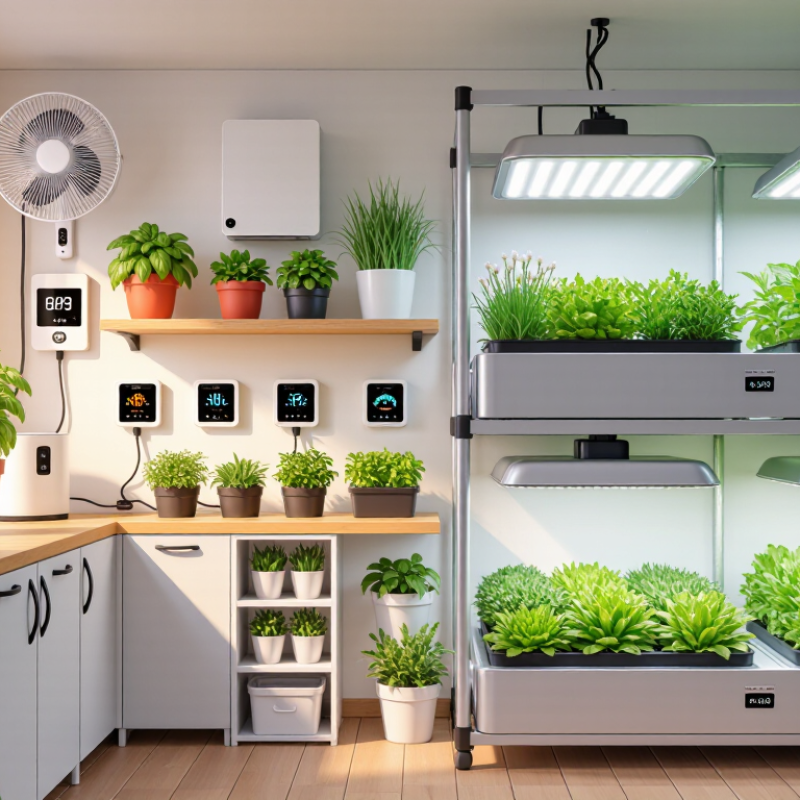
2026 Best Indoor Garden Lighting How to Automate It?

Indoor Garden Lighting Basics: PPFD, DLI, and the 400–700 nm PAR Range

2026 Best Indoor Garden Lighting: How to Automate It

Indoor garden lighting starts with usable light, not brightness alone. PAR describes wavelengths from 400–700 nanometers that plants can use for photosynthesis. PPFD measures those photons reaching one square meter each second. It is recorded in micromoles per square meter per second. A bright room can still provide weak PPFD near a plant’s leaves.

DLI shows the plant’s total daily light dose. Calculate it with PPFD × lighting hours × 3,600 ÷ 1,000,000. For example, 300 PPFD over 12 hours produces about 13 DLI. Leafy greens often tolerate modest levels, while fruiting plants usually need more. Plant variety, leaf age, temperature, and carbon dioxide also change the result. A single target can mislead.

Automation makes consistency easier. Set a timer, then adjust intensity with a dimmer when possible. A PAR meter placed at the canopy gives better information than a wall-mounted sensor. Keep the sensor level with the highest leaves, and measure several points because corners may receive less light. I once trusted the center reading and ignored shaded edges. Growth exposed that mistake.

Use gradual changes rather than sudden intensity jumps. Start with a conservative PPFD, observe leaf posture, and check new growth weekly. Pale leaves may indicate excessive light, but nutrition or watering can cause similar symptoms. Record PPFD, hours, temperature, and plant response in a simple log. Perfect automation is unlikely; careful observation still matters.

Select LEDs by Efficacy, Spectrum, Coverage, and Target PPFD Levels

2026 Best Indoor Garden Lighting: How to Automate It?

Choosing indoor garden LEDs requires more than comparing wattage. Check efficacy, measured in micromoles per joule, because efficient fixtures produce more usable light with less heat. A practical target is at least 2.5 µmol/J for many home gardens. Spectrum matters too. Plants use 400–700 nanometers, but balanced white light helps reveal leaf color, pests, and stress. Red and blue output can support growth, yet extreme colors make daily inspection harder.

Measure coverage at canopy height, not from the fixture’s box description. Leafy greens often perform well around 150–300 µmol/m²/s PPFD. Herbs may need 250–450, while fruiting plants can require 500–800. These ranges vary with temperature, carbon dioxide, cultivar, and growth stage. Start lower.

Automation should control intensity, timing, and distance. Use a timer for a consistent photoperiod, then add dimming when seedlings emerge. A light sensor or PAR meter can verify PPFD across the tray. Corners often receive much less light than the center. Rotate containers, or improve fixture spacing.

In my early setup, I focused on brightness and ignored heat near the canopy. The plants stretched, then developed pale leaves. That mistake taught me to log PPFD, temperature, and daily light exposure together. A simple schedule might use 14 hours of light, followed by 10 hours of darkness. Check the plants weekly. Automation reduces guesswork, but it does not replace observation.

2026 Best Indoor Garden Lighting: How to Automate It? Select LEDs by Efficacy, Spectrum, Coverage, and Target PPFD Levels

Indoor Garden LED Selection and Automation Planning Guide
Garden Use Recommended PPFD at Canopy Suggested Photoperiod Estimated DLI Range Spectrum Guidance Minimum LED Efficacy Coverage and Uniformity Target Automation Method
Seed Starting and Cuttings 100–200 µmol/m²/s 14–16 hours/day 5–12 mol/m²/day Broad 400–700 nm output with balanced blue light; avoid excessive heat and high intensity. ≥2.3 µmol/J Cover the full tray with less than ±20% PPFD variation when possible. Use a timer with a gradual ramp-up and ramp-down. Reduce output if seedlings stretch or show bleaching.
Leafy Greens 200–300 µmol/m²/s 14–16 hours/day 10–17 mol/m²/day Full-spectrum white light spanning approximately 400–700 nm; moderate blue content supports compact growth. ≥2.5 µmol/J Measure a 3 × 3 or larger grid across the canopy; aim for at least 80% of the target PPFD at grid points. Schedule lights during the preferred hours and link irrigation to substrate moisture rather than to the light timer alone.
Culinary Herbs 250–450 µmol/m²/s 14–16 hours/day 13–26 mol/m²/day Balanced white full-spectrum LEDs; blue light can help maintain compact basil, mint, parsley, and similar herbs. ≥2.5 µmol/J Use overlapping fixtures or a continuous light bar to reduce dark edges and improve uniformity. Use a dimmable driver controlled by a timer or smart relay. Increase intensity gradually after transplanting.
Compact Fruiting Plants 500–900 µmol/m²/s 12–16 hours/day 22–52 mol/m²/day High-output full-spectrum light with strong photosynthetically active radiation; optional far-red output should be independently controllable. ≥2.7 µmol/J Use multiple fixtures for even coverage; maintain consistent canopy height and verify PPFD after pruning or plant training. Automate dimming, photoperiod, temperature, humidity, and ventilation together to control heat and transpiration.
Low-Light Ornamentals 75–150 µmol/m²/s 10–14 hours/day 3–8 mol/m²/day Comfortable neutral-to-warm white spectrum with adequate blue light; avoid relying on visible brightness alone. ≥2.2 µmol/J Prioritize gentle, evenly distributed light to prevent leaf scorch near the fixture. Use a simple timer and an ambient-light sensor to prevent unnecessary operation when daylight is sufficient.
High-Efficiency LED Specification Select according to crop target Set according to DLI goal Calculate from PPFD × time Evaluate the published photon spectrum rather than judging performance by color temperature or appearance. Preferred: 2.5–3.0 µmol/J at fixture level Confirm that the claimed efficacy is measured at the complete fixture, not only at the individual diode. Choose dimmable fixtures with 0–10 V, PWM, or a compatible digital control interface.
Coverage and Power Planning Average PPFD must match the crop target Keep a consistent daily schedule DLI = PPFD × hours × 3,600 ÷ 1,000,000 Use a spectrum suitable for the crop growth stage and measure at the actual canopy height. Higher efficacy reduces electrical consumption and fixture heat. Approximate fixture power: target PPFD × growing area ÷ fixture efficacy. Add a 15–25% design margin for losses and operating conditions. Install a PAR/PPFD sensor at canopy level and use feedback dimming when the measured value differs from the target.
Automation Safety Limits Avoid sudden changes greater than approximately 10–20% per day Provide a daily dark period Track weekly DLI, not only instantaneous PPFD Keep driver and fixture temperatures within their rated operating range. Do not compare efficacy values measured under different test conditions without checking the test method. Keep fixtures at a stable height and recheck the grid after plant growth changes the canopy. Use temperature and humidity cutoffs, overload protection, backup scheduling, and manual override controls.
Measurement note: PPFD is the instantaneous photosynthetic photon flux density at canopy height, measured in µmol/m²/s. DLI is the total daily light received by the crop, measured in mol/m²/day. Actual targets vary with cultivar, plant age, CO₂ availability, temperature, nutrition, and growing conditions.

Calculate Photoperiods Using Crop-Specific DLI Targets and Light Output

Automated indoor lighting starts with DLI, not a fixed timer. Daily Light Integral measures the photons a crop receives in one square meter each day. University extension guidance commonly places lettuce near 12–17 mol/m²/day, while basil often performs around 15–25 mol/m²/day. These ranges vary with cultivar, temperature, and growth stage.

Use this calculation:

photoperiod hours = target DLI × 1,000,000 ÷ (PPFD × 3,600)

At 250 µmol/m²/s, a lettuce target of 15 mol/m²/day needs about 16.7 hours. A light meter should measure canopy-level PPFD, not the fixture’s advertised output. The American Society of Agricultural and Biological Engineers identifies PPFD as the relevant photon measurement for controlled-environment lighting. Purdue Extension and Oregon State University Extension also emphasize measuring daily light exposure across the crop area.

Automation can adjust dimming and operating hours after sensor readings. I would set a safe ceiling first. Excessive intensity can increase leaf temperature and water demand. My first calculation ignored shadows from mature leaves. That mistake reduced uniformity. A weekly grid test helps reveal dark corners, dusty sensors, and changing canopy height. Weather data can also prevent unnecessary lighting when sunlight enters through windows. However, sunlight sensors need calibration, and simple systems may drift. Review the logged DLI every few days, then change the schedule gradually.

Plants do not read spreadsheets.

Automate Grow Lights with Timers, Sensors, Dimming, and Smart Controls

2026 Best Indoor Garden Lighting: How to Automate It?

Automation begins with a dependable timer. Set lights for a consistent photoperiod, then adjust it by plant response. Most leafy greens tolerate long light periods, but excessive exposure can cause pale leaves, curled edges, or stalled growth. The U.S. Department of Energy reports that LED lighting can use up to 75% less electricity than incandescent lighting. However, this figure does not measure every horticultural fixture. Check actual wattage, heat, and photon output.

Add a light sensor near the highest leaves. It can reduce output when strong daylight enters through a window. A dimmer also helps during seedlings, hot afternoons, and seasonal changes. Keep sensors away from direct airflow. Sudden readings can create unwanted brightness swings. Small errors happen.

Smart controls can record temperature, humidity, runtime, and energy use. The U.S. Environmental Protection Agency identifies lighting controls as an important efficiency strategy, especially when schedules prevent unnecessary operation. For indoor gardens, automation should protect plants before saving power. A temperature sensor can lower light intensity when the canopy becomes too warm. A humidity alert can also reduce disease risk, though it cannot replace ventilation.

Use manual checks every few days. Leaves remain better evidence than an app dashboard. I once trusted a timer without checking its clock drift; the plants received irregular nights. That mistake was avoidable. Test the schedule during one full week, compare growth and electricity readings, and revise only one setting at a time.

Verify Results Through PPFD Mapping, Energy Use, and Plant Growth Data

2026 Best Indoor Garden Lighting: How to Automate It?

Automation should be tested with plant data, not only a timer. Measure PPFD at canopy height using a calibrated quantum sensor. Map the center, corners, and shaded edges. The ASABE S640 standard defines PPFD and DLI as useful reporting measures for controlled environments. For leafy greens, university production guides commonly suggest a daily light integral near 12–17 mol/m²/day. Fruiting crops often require more, sometimes 20–30 mol/m²/day. These ranges are practical references, not guarantees.

Record light output every week. Dust, heat, and aging can reduce performance.

My first map looked balanced, but the rear tray received 24% less PPFD. That error changed the growth data.

Track plant height, leaf count, fresh weight, and harvest time beside daily energy use. A plug-in meter can show kilowatt-hours, while a controller logs dimming and operating hours. Divide harvested mass by electricity consumed. This reveals whether higher light actually improves efficiency.

The U.S. Department of Energy’s solid-state lighting research reports describe horticultural systems reaching photon efficacies above 3 μmol/J in advanced designs. However, fixture ratings rarely match real room performance.

Compare measured PPFD with wattage, heat, and crop response. Set alerts for unusual energy spikes or falling light levels.

Automation is useful, but imperfect sensors can create false confidence. Recheck the map after moving shelves, changing plant height, or adding reflective panels.

FAQS

What should I compare when choosing indoor garden LEDs?

Compare efficacy, spectrum, canopy coverage, heat, and target PPFD. Wattage alone says little. Aim for about 2.5 µmol/J or higher.

What PPFD levels suit different indoor plants?

Leafy greens often suit 150–300 µmol/m²/s. Herbs may need 250–450. Fruiting plants can require 500–800. Start lower.

Why does the light spectrum matter?

Plants use light between 400 and 700 nanometers. Balanced white light helps reveal pests, stress, and leaf color. Extreme colors make inspection harder.

How can I check whether light covers the whole tray?

Measure PPFD at canopy height. The tray center may look bright while corners remain dim. Rotate containers or adjust fixture spacing.

How should I automate the daily light schedule?

Use a dependable timer for consistent light and darkness. A practical example is 14 hours on and 10 hours off. Check the clock regularly.

When should I use dimming or light sensors?

Dimming helps seedlings, hot afternoons, and seasonal changes. Place sensors near the tallest leaves, away from direct airflow. Small errors happen.

What signs suggest excessive light or heat?

Watch for pale leaves, curled edges, stalled growth, or a hot canopy. Reduce intensity and check temperature before changing several settings.

Can automation replace regular plant inspection?

No. Leaves remain better evidence than an app dashboard. Check plants every few days and record PPFD, temperature, and light duration.

What common automation mistake should growers avoid?

Do not trust a timer without testing it. I once missed clock drift, causing irregular nights. Test one full week and change one setting at a time.

Conclusion

Indoor garden lighting is most effective when it is planned around plant needs rather than fixture appearance. PPFD measures the light reaching a specific area, while DLI shows the total usable light plants receive over a full day. Since PAR covers the 400–700 nm range, choose efficient LED fixtures with a suitable spectrum, even coverage, and enough output to meet the target PPFD for each crop. Photoperiods should then be calculated by balancing light intensity with the crop’s daily DLI requirement, helping plants receive consistent energy without unnecessary power use.

How to automate indoor garden lighting begins with a reliable timer or smart controller that manages daily schedules. Add dimming functions, light sensors, and environmental sensors to adjust intensity when conditions change. To confirm performance, map PPFD at plant height, track energy consumption, and record plant growth over time. These measurements make it easier to refine schedules, improve uniformity, reduce wasted electricity, and create a repeatable lighting routine for different crops and growth stages.

Aria

Aria

Aria is a dedicated marketing professional with a deep passion for innovative strategies and a keen understanding of our company's product offerings. With a wealth of experience in the industry, Aria excels at crafting engaging content that highlights the unique features and benefits of our......