When it comes to successful seedling growth, light is critical. Many growers often wonder, "How far should grow lights be from seedlings?" The answer may vary based on factors like light type and plant species. Proper light distance can significantly impact seedling health, growth rate, and overall vigor.
Placing grow lights too close may cause heat stress or light burn. Conversely, too much distance can result in leggy seedlings that stretch for light. A balance must be struck for optimal growth. Typically, the distance ranges from 12 to 24 inches, but this isn’t a one-size-fits-all solution. Consider the intensity of the light and the specific needs of your plants.
Experimentation is often required. You may need to adjust light height based on growth stages. Monitoring your seedlings closely can guide adjustments. Each grower's experience will shape their understanding of ideal conditions. Ultimately, understanding the nuances of light distance will empower you to nurture thriving seedlings.
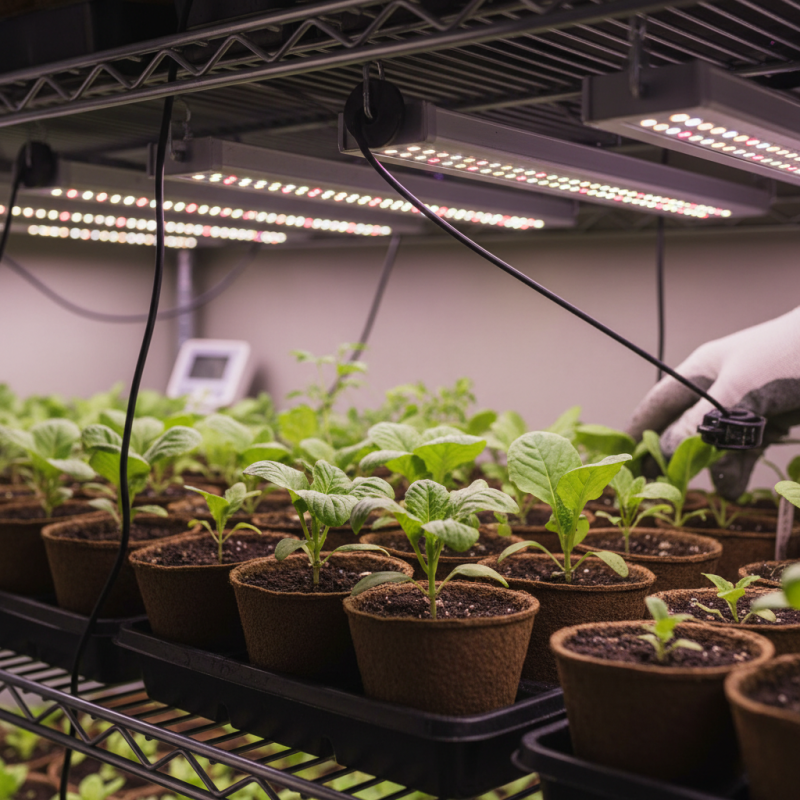
When growing seedlings, light intensity is crucial. The optimal distance for grow lights varies depending on the type of light used. For fluorescent lights, a distance of 2-4 inches is often recommended. High-intensity discharge (HID) lights, on the other hand, should typically be set 12-24 inches away. These distances ensure seedlings receive adequate light without experiencing light burn.
Research indicates that seedlings exposed to proper light intensity grow stronger and healthier. A study published by the American Society for Horticultural Science found that seedlings under optimal light conditions exhibited a 30% increase in growth rate. Conversely, light placed too far can result in elongated stems, while light that is too close may cause leaf scorching.
Balancing light distance requires careful observation. Seedlings may react differently based on their specific needs. Monitoring growth patterns and adjusting light placement can lead to improvements. Experimentation is key to finding the right distance for your particular setup. Remember, even seasoned growers can face challenges. Frequent adjustments may be necessary to fine-tune the growth environment for optimal results.
When growing seedlings, light duration is crucial. Research indicates that a 16 to 18-hour photoperiod encourages optimal growth. However, balance is essential. Too much light can lead to elongated stems, known as etiolation. Seedlings may become tall and spindly, compromising their health.
Seedling height is affected by light intensity and duration. A report from the American Society of Horticultural Science states that seedlings exposed to high light levels for extended periods tend to grow faster. Yet, they may also become weak. Plants require a period of darkness to develop sturdy stems and prevent stretch. It is advised to maintain a light distance of 12 to 24 inches for young plants.
Regular monitoring is necessary to find the right balance. Adjusting the light source can help prevent overexposure. Seedlings with uneven growth signal a need for change in light positioning or duration. Careful observation is key to nurturing strong, resilient plants.
Grow lights are essential for nurturing seedlings. Understanding the different types ensures the best growth conditions. LED, fluorescent, and HID lights offer distinct advantages. Each type has varying effects on seedling development and energy efficiency.
LED grow lights are popular due to their low heat output and energy efficiency. They consume up to 50% less energy than conventional lighting. Studies show plants under LED lights exhibit improved growth rates. A 2020 report found that seedlings under LEDs had a 20% faster growth rate compared to traditional bulbs. This rapid growth makes LEDs a preferred choice for many growers.
Fluorescent lights provide broad-spectrum illumination and are often affordable. They are effective for young plants. However, they are less energy-efficient than LEDs. A report highlighted that fluorescent lights use about 35% more energy than their LED counterparts. HID lights are powerful but generate significant heat. This can be detrimental if not managed correctly. They are often used in larger setups, but overheating can harm young seedlings if they are positioned too closely. Each type has pros and cons, and it’s essential to consider these when selecting grow lights.
| Type of Grow Light | Recommended Distance from Seedlings (inches) | Light Intensity (µmol/m²/s) | Heat Output (°F) |
|---|---|---|---|
| LED | 12-24 | 200-400 | 70-90 |
| Fluorescent | 6-12 | 100-200 | 60-80 |
| HID | 24-36 | 400-800 | 100-120 |
Proper light distance is crucial for seedlings. As they grow, their light needs change. When seedlings emerge, keep lights about 2-4 inches away. This promotes strong, healthy growth. As they mature, gradually increase the distance to about 12-24 inches. This allows them to reach for light without becoming leggy.
Tips for managing light distance: Monitor your seedlings daily. Check for signs of light stress, like yellowing leaves. If plants seem to stretch toward the light, adjust the height accordingly. Experimenting with distances helps find the best setup for your specific plants.
Remember that not all seedlings grow equally. Some may thrive in closer light, while others prefer more distance. Reflect on their growth and adjust based on their needs. Use a light meter to track intensity, ensuring your seedlings receive an optimal balance.
Light burn and stretching are common problems for seedlings. When grow lights are too close, seedlings can suffer from light burn. The leaves become scorched, leading to stunted growth. According to the American Society for Horticultural Science, the ideal distance for grow lights is around 12 to 24 inches above seedlings, depending on the light intensity.
Inadequate light can cause seedlings to stretch toward the light source. This results in weak stems and poor structure. Research indicates that seedlings require a minimum of 14 to 16 hours of light per day. Yet, too much intensity can backfire. Maintaining the right balance is essential.
Monitoring the growth and health of seedlings is vital. Look for signs of distress. If the leaves turn yellow or the stems elongate excessively, adjustments are necessary. Each plant species has different light requirements. Understanding these nuances can help avoid mishaps. Gardening may involve trial and error, but experience leads to improvement.
: A photoperiod of 16 to 18 hours promotes optimal growth for seedlings.
Too much light can lead to etiolation, causing seedlings to become tall and spindly.
High light intensity can speed up growth but may weaken the seedlings.
A dark period helps develop sturdy stems and prevents stretching in seedlings.
Maintain a distance of 12 to 24 inches from the seedlings to prevent light burn.
LED lights are energy-efficient and promote faster growth rates with low heat output.
Fluorescent lights are affordable but less energy-efficient than LEDs, using more energy overall.
Placing lights too close can scorch seedlings, leading to reduced growth and health.
Look for yellow leaves or excessive stem elongation as signs of distress.
Yes, gardening involves careful observation and adjustments to improve seedling growth over time.
The distance between grow lights and seedlings is crucial for optimal growth, prompting the question, "How far should grow lights be from seedlings?" Generally, this distance depends on the light intensity and type of grow lights used, such as LED, fluorescent, or HID. Seedlings require specific light intensities to thrive, so understanding and adjusting the distance accordingly is essential to prevent issues like light burn.
Additionally, photoperiod considerations play a vital role, as the duration of light exposure affects seedling height and overall health. As seedlings mature, it’s important to adjust the light distance to accommodate their growth stages. Common mistakes, such as allowing lights to be too close or too far, can lead to undesirable stretching or burning of seedlings. By understanding these factors, growers can create an optimal environment for their plants.

Enova Lighting