How to prevent light burn on plant canopies is a practical question for every serious indoor grower. Bright, intense light can create pale patches, curled edges, dry tips, and brittle upper leaves. These symptoms often appear near the fixture, where heat and radiation combine. The damage may look like a nutrient deficiency, but the cause can be very different.
Dr. Bruce Bugbee, a respected plant physiologist and lighting researcher, often reminds growers, “Plants are not solar panels.” That simple statement matters. More light does not always produce healthier plants. Canopy distance, fixture intensity, leaf temperature, airflow, humidity, and plant acclimation must work together. A strong lamp can be safe at one height and harmful at another.
This guide presents seven practical ways to reduce light stress before the canopy becomes damaged. It covers gradual light increases, accurate measurements, fixture positioning, airflow, and careful observation. A reliable light meter can improve decisions, but it cannot replace daily inspection. Leaves tell the story.
Look closely at the top growth. Are the newest leaves turning pale while lower leaves remain green? Are leaf edges curling upward? Those clues deserve attention. Still, diagnosis is not always clean. Heat stress, nutrient imbalance, and light burn can overlap. That uncertainty requires patience, records, and small adjustments.
No checklist is perfect. Plants respond differently, even in the same room. By combining scientific guidance with direct canopy observations, growers can reduce avoidable damage and create a more stable growing environment.
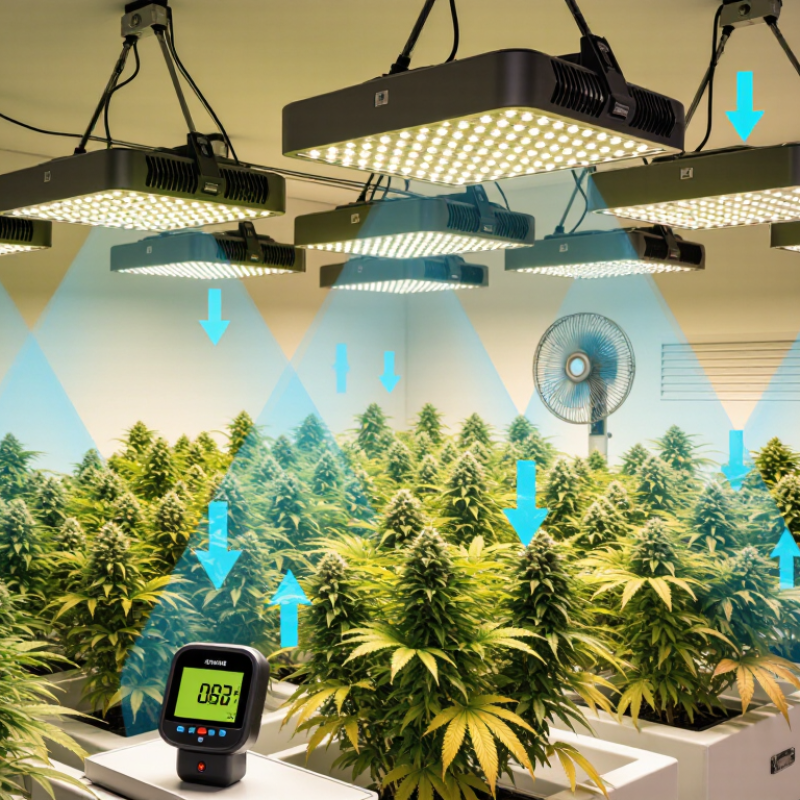
Light burn is tissue damage caused by excessive light exposure, usually on the upper leaves closest to a powerful fixture. Those leaves may develop pale patches, curled edges, or dry, brown spots. The damage is gradual. It can resemble a nutrient deficiency, but the pattern often gives it away: new growth looks bleached while lower leaves remain green.
Light burn develops when light intensity exceeds the canopy’s ability to use it. High leaf temperature, weak airflow, low humidity, and sudden changes make the problem worse. Plants also need time to adjust after moving closer to a light source. A healthy plant can still suffer if intensity rises too quickly. Not always heat. Sometimes the light itself is excessive.
Prevention starts with measuring intensity instead of guessing. Increase exposure gradually, keep consistent airflow across the canopy, and check the temperature of the highest leaves. Raising the fixture slightly can reduce stress, while rotating containers may prevent one side from receiving constant exposure. Watch new growth for several days after each adjustment. Pale leaves will not quickly regain their color, so judge success by newer leaves. In my own observations, I have reacted too late when relying only on room temperature. Leaf temperature and plant response often tell a different story. A simple light meter helps, but careful daily observation remains essential.
Light burn is usually caused by excessive photon intensity reaching leaves faster than the canopy can use or dissipate it. The chart shows practical PPFD reference ranges and the corresponding 12-hour daily light integral (DLI). Actual burn risk varies with species, temperature, humidity, airflow, leaf age, irrigation, and how gradually plants are acclimated.
Early light stress often appears before serious damage. Watch the newest leaves closely. Pale upper leaves, curled edges, and dry-looking tips can signal excessive intensity. Some plants develop a faint bleached patch near the canopy’s highest point. The lower leaves may remain dark green, which makes the problem easy to miss. Check the same plants each day, preferably at the same time. A phone photograph can reveal gradual color changes better than memory.
Measure the distance between the light source and the tallest leaves. Increase that distance slightly when symptoms appear, or reduce intensity when adjustment is possible. Rotate containers for more even exposure. Raise light levels slowly after moving young plants indoors. Maintain steady airflow, but avoid hot, drying drafts. Check leaf temperature with a reliable infrared thermometer when available. Humidity, watering, and nutrient problems can resemble light stress, so change one factor at a time. I have sometimes blamed light too quickly; the roots were actually staying too wet.
Tips: Inspect the canopy edges and newest growth first. Mark the tallest leaf with a small note. If bleaching spreads within two days, reduce exposure modestly. Keep a simple log of height, distance, temperature, and leaf color. Do not wait for crispy leaves. Early correction is gentler.
Light burn often appears as pale, crispy patches on the upper leaves. The damage can develop within days after moving plants closer to a strong grow light. In my experience, intensity is usually the first variable to check, not watering. Use a light meter when possible, and record readings at canopy level. Young plants need gentler light than mature plants. Increase intensity gradually, by about 10% every few days, while watching new growth.
Tips: Keep the fixture farther away when leaf edges curl, bleach, or feel unusually warm. Raise it slightly before reducing the daily schedule. A small fan can improve air movement, but it will not correct excessive light. Check the top leaves each morning. They often reveal stress first.
Height and exposure time must work together. A light placed closer becomes much stronger, even when the timer remains unchanged. If the canopy receives intense light for sixteen hours, reduce either brightness or exposure. Do not change both dramatically at once. That makes the plant’s response difficult to interpret. I once adjusted height and timing together, then misread the recovery. A slower method would have been more reliable. Keep temperature and humidity reasonably stable during changes. When new leaves emerge evenly green, the setting is probably closer to balance. Still, every variety responds differently, so careful observation matters more than a fixed schedule.
Strong light can improve compact growth, but a sudden increase may bleach leaves and damage tender canopy tissue. The safest approach is gradual acclimation. Measure PPFD at canopy height, not above the fixture. Increase intensity by about 10–20% every two or three days. Watch the newest leaves closely. They often show stress first.
Daily Light Integral matters too. Cornell University’s controlled-environment guidance commonly places many leafy crops near 12–17 mol·m⁻²·day⁻¹, while crop needs vary by species and growth stage. Research reviewed in HortScience by Runkle and Heins shows that light response depends on temperature, carbon dioxide, water status, and leaf age. Light alone does not determine plant performance.
Keep roots evenly moist, but avoid saturated media during acclimation. Dry roots can make moderate light feel extreme.
Use a small fan for gentle airflow. It helps leaves adjust mechanically and reduces warm, stagnant air around the canopy. Raise the light before increasing its power when possible. A pale upper surface, crisp margins, or downward curling suggests the change was too fast. Move the fixture back, restore stable moisture, and wait several days. I have found fixed schedules imperfect; cloudy weather and plant stress can change the correct pace. Record PPFD, temperature, watering, and visible symptoms each day. That simple log often reveals mistakes that memory misses.
Light burn often begins with pale, crispy patches on upper leaves. Reduce fixture intensity before moving the plant. Raising the light slightly can also soften exposure. Acclimate new plants gradually over seven to ten days. A sudden change can damage leaves quickly. Check leaf temperature with an infrared thermometer, not only room temperature. Warm leaves need stronger airflow and careful light control.
Water deeply when the growing medium begins to dry, but avoid keeping roots saturated. Dry roots cannot cool leaves effectively. Water early in the light period when possible. Heat rises when humidity is too low. Keep humidity steady, then improve ventilation if the canopy feels warm or stagnant. Use gentle airflow across the leaves, not a harsh stream. Leaves should move slightly.
Nutrition matters more than many growers expect. Excess fertilizer can worsen burnt edges and confuse diagnosis. Follow a measured feeding plan, and test irrigation water when symptoms repeat. Do not correct every pale leaf with extra nutrients.
I once increased feeding when the real problem was excessive light. That mistake took weeks to reveal itself.
Inspect new growth every few days, record temperature, humidity, watering, and light changes, and adjust one factor at a time. Careful notes often expose patterns that memory misses.
Light burn is tissue damage from excessive light exposure. It usually affects upper leaves nearest the fixture. Pale patches, curled edges, and crispy brown spots may appear. Lower leaves can remain green. Not always heat.
Look at the pattern. New growth often appears bleached while older, lower leaves stay green. Damage usually concentrates near the strongest light. Nutrient problems may spread differently. The pattern is helpful, but not perfect.
Inspect the highest leaves first. Look for pale surfaces, dry margins, unusual warmth, or downward curling. New leaves reveal changing stress sooner. Watch new growth.
Measure intensity at canopy level when possible. Increase exposure gradually, by roughly 10% every few days. Young plants need gentler light than mature plants. Avoid guessing from room brightness alone.
Raise the fixture slightly before making major timing changes. Height and exposure time work together. If light remains intense for sixteen hours, reduce brightness or duration. Do not change both dramatically at once.
Increase intensity by about 10–20% every two or three days. Watch the newest leaves after each adjustment. Keep moisture, temperature, and airflow reasonably stable. A sudden jump can bleach tender tissue.
High leaf temperature, weak airflow, low humidity, and sudden changes increase stress. Dry roots can make moderate light feel excessive. Keep roots evenly moist, but avoid saturated growing media. Small fan, gentle movement.
Existing pale leaves may not regain their color quickly. Judge progress by newer leaves emerging evenly green. Record light readings, temperature, watering, and symptoms daily. I once changed height and timing together, then misread the recovery. A slower method would have been better.
Light burn occurs when a plant canopy receives more light energy than its leaves can safely process, often worsened by heat, poor airflow, dry roots, or sudden exposure to intense lighting. Early signs may include pale or bleached upper leaves, curled edges, dry patches, and slowed growth. Learning how to prevent light burn on plant canopies begins with observing these symptoms early and responding before damage spreads.
Reduce intensity, raise the light, or shorten the daily exposure period when stress appears. Plants should be acclimated gradually by increasing brightness or exposure in small steps rather than making sudden changes. Maintain suitable temperatures, consistent watering, balanced nutrition, and steady airflow so leaves can regulate heat and moisture effectively. Regularly inspect the highest leaves, adjust the light as the canopy grows, and keep environmental conditions stable to support healthy development without overwhelming the plants.

Enova Lighting