Understanding light metrics is crucial in horticulture. Many growers often ask, "What is the difference between PAR and PPFD?" Dr. Emily Hart, a leading horticultural scientist, highlights this confusion. She states, "Knowing these terms can make or break your plant's growth."
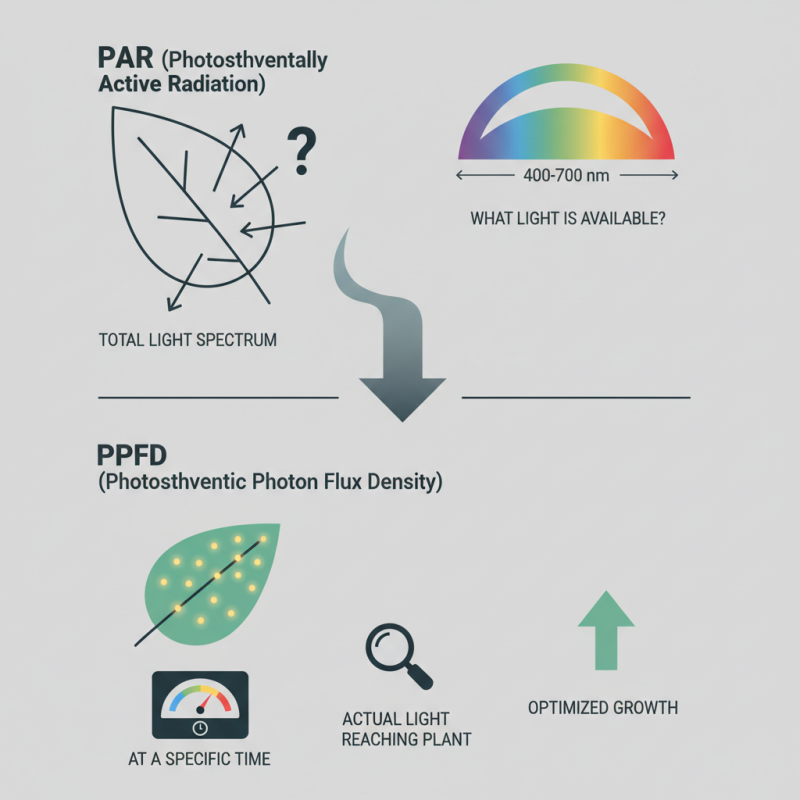
PAR, or Photosynthetically Active Radiation, represents the total spectrum of light plants use. It spans wavelengths from 400 to 700 nanometers. However, it doesn’t define how much of this light plants actually harness. This is where PPFD, or Photosynthetic Photon Flux Density, comes in. PPFD measures the light that reaches plant surfaces at a specific time.
Understanding this difference is key for optimizing plant growth. Misinterpretations can lead to inadequate lighting and poor yields. As Dr. Hart points out, grasping both metrics allows growers to tailor their light sources efficiently. The world of plant care requires precision and ongoing reflection on methods.
Understanding the Concepts of Photosynthetically Active Radiation (PAR)
Photosynthetically Active Radiation (PAR) refers to the spectrum of light plants utilize for photosynthesis. This range typically spans from 400 to 700 nanometers, covering blue, green, and red light. Understanding PAR is crucial for those engaged in horticulture or agriculture. It directly affects plant growth, influencing color, yield, and overall health.
Measuring PAR helps in optimizing growing conditions. For instance, indoor gardeners often use PAR meters to ensure their plants receive adequate light. However, not everyone fully grasps how to interpret these measurements. It's common to confuse PAR with total light levels or intensity, which can lead to inadequate light setups. Light quality matters as much as quantity for vibrant plant life.
Engaging with PAR data enhances your gardening strategy. A lack of knowledge might result in over- or under-lighting plants. This misstep can inhibit growth or even lead to plant stress. Therefore, taking the time to understand PAR's role in the photosynthetic process can lead to more successful growing practices. Light is not merely brightness; it is a vital component of plant health.
Defining Photosynthetic Photon Flux Density (PPFD) and Its Measurement
Photosynthetic Photon Flux Density (PPFD) is a key metric in horticulture. It measures the amount of light, in micromoles per square meter per second (µmol/m²/s), that plants capture for photosynthesis. This parameter is critical for understanding light's role in plant growth. Research indicates that a PPFD of approximately 400-700 µmol/m²/s is optimal for many crops. Proper measurement can significantly impact yield and quality.
To measure PPFD accurately, use quantum sensors designed for this purpose. These sensors provide precise data by detecting specific wavelengths of light that plants utilize. Many reports emphasize calibrating these instruments regularly to ensure reliable readings. The angle and distance from the light source also affect PPFD readings. Placing sensors at varying heights can deliver a comprehensive light profile for your plants.
Tip: Ensure even light distribution in your growing area. Uneven light can cause poor plant development. Regularly check your PPFD levels and adjust lighting to maintain optimal conditions. By understanding PPFD and its importance, growers can significantly enhance their cultivation strategies.
Understanding PAR and PPFD
This chart illustrates the relationship between Photosynthetically Active Radiation (PAR) and Photosynthetic Photon Flux Density (PPFD) across different wavelengths of light. It represents the photon density that plants can use for photosynthesis.
Comparative Analysis: PAR and PPFD in Plant Growth and Energy Use
PAR, or Photosynthetically Active Radiation, is essential for photosynthesis in plants. It consists of light wavelengths that plants utilize to grow. On the other hand, PPFD, or Photosynthetic Photon Flux Density, measures the amount of PAR reaching a specific area, typically measured in micromoles per square meter per second. Understanding these terms is crucial for gardeners and growers.
In plant growth, both PAR and PPFD play distinct roles. PAR provides the quality of light necessary for photosynthesis. It determines how efficiently plants convert light into energy. PPFD indicates the quantity of light available for this process. Ideally, a balance between the two is vital. However, it’s not always easy to achieve this perfect balance in different environments.
Energy use is another aspect where PAR and PPFD must be considered. Different plants require varying levels of light intensity for optimal growth. Too little PPFD might stunt growth, while excessive light can cause stress. This can lead to leaf burn or reduced overall health. Growers must regularly assess light conditions, adjusting as needed, to fine-tune their plant care strategies. Reflecting on these factors can help improve plant growth and energy efficiency in various settings.
Interpreting PAR and PPFD Values: Importance for Horticulture and Agriculture
Photosynthetically Active Radiation (PAR) and
Photosynthetic Photon Flux Density (PPFD)
are crucial concepts in horticulture and agriculture. PAR refers to the spectrum of light that plants use for
photosynthesis, which ranges from 400 to 700 nanometers. Understanding PAR helps growers optimize lighting conditions.
Meanwhile, PPFD measures the amount of PAR reaching a specific area over time, expressed in micromoles per square meter
per second (µmol/m²/s).
Accurate interpretation of these values is vital for efficient plant growth. For instance, studies reveal that a PPFD
value of around 400-1,000 µmol/m²/s can significantly enhance plant productivity.
When conditions deviate from optimal PPFD levels, plants may exhibit stunted growth or abnormal development. It’s essential
for growers to monitor these values closely to maintain healthy crops.
Tip: Keep a daily log of light levels. This practice helps analyze patterns
over time. Adjust your light sources based on actual PPFD measurements for best outcomes.
Light environments are complex. Factors like distance from light sources and canopy structure affect how plants receive
light. Even with optimal PAR values, if the PPFD is inadequate, plant growth can suffer. A thoughtful approach to
understanding and adjusting these metrics is essential for achieving successful yields.
Impact of Light Quality on PAR and PPFD Measurements in Growing Systems
Understanding the impact of light quality on PAR and PPFD measurements is crucial for optimal plant growth.
Photosynthetically active radiation (PAR) refers to the light spectrum plants utilize for photosynthesis. Essentially, it covers the wavelengths from 400 to 700 nm. However, PPFD (photosynthetic photon flux density) quantifies the amount of PAR that reaches a specific area. This distinction is significant, yet often overlooked.
The quality of light affects both PAR and PPFD readings. Different light sources emit various wavelengths, influencing photosynthesis efficiency.
For example, blue light promotes vegetative growth, while red light supports flowering and fruiting. Understanding these qualities can help growers tailor their lighting conditions to match their plants' needs. Unfortunately, not all measurement tools account for the light spectrum accurately.
This can lead to misleading data and suboptimal plant growth.
It's essential to regularly evaluate and calibrate your equipment.
Quality can vary over time, affecting your readings. Reflecting on this aspect allows growers to make informed decisions. Are you using the right measurement tools?
Are your plants responding as expected? Evaluating these questions can lead to better cultivation practices.
FAQS
: PPFD measures the light captured by plants for photosynthesis. It is expressed in µmol/m²/s.
Research suggests a PPFD of 400-700 µmol/m²/s is ideal for many plants.
Use quantum sensors designed for PPFD measurement. Ensure they are calibrated regularly.
The angle and distance from the light source impact the accuracy of PPFD measurements.
Light quality influences PAR and PPFD, affecting photosynthesis efficiency and overall growth.
Blue light encourages vegetative growth; red light is essential for flowering and fruiting.
Regularly check and adjust your lighting setup to avoid uneven light exposure for plants.
Reflect on whether your tools accurately account for the light spectrum your plants need.
Regularly assess your PPFD levels and light quality. Adjust conditions based on plant response.
Misleading data can lead to poor growth. Reflect on your strategy to enhance cultivation efforts.
Conclusion
The article "How to Understand the Difference Between PAR and PPFD" explores key concepts in plant lighting, emphasizing the significance of understanding Photosynthetically Active Radiation (PAR) and Photosynthetic Photon Flux Density (PPFD). PAR refers to the range of light wavelengths that plants use for photosynthesis, while PPFD quantifies the amount of light that actually reaches plant leaves, measured in micromoles per square meter per second.
A comparative analysis of PAR and PPFD reveals their roles in plant growth and energy utilization, highlighting the importance of accurate measurements for horticulture and agriculture. Additionally, the article discusses how light quality can impact these measurements, underscoring the need for horticulturists to consider both PAR and PPFD to optimize growing conditions. Ultimately, understanding "What is the difference between PAR and PPFD" is crucial for effective plant cultivation in various growing systems.

 Enova Lighting