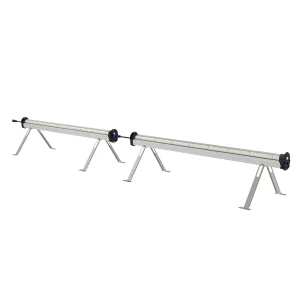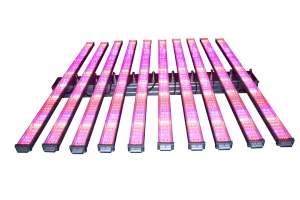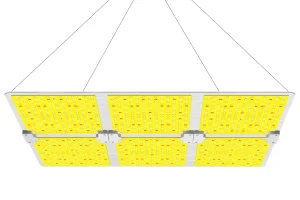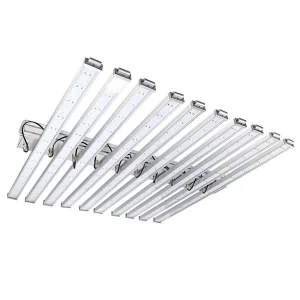
The global industrial and commercial lighting markets are witnessing a tectonic shift toward high-density integration. In this landscape, Chip-on-Board (COB) LED technology has emerged as the definitive solution for high-lumen density, superior thermal management, and uniform luminous output. As a premier CE Certified COB Lighting Exporter, Jiangxi Enova Lighting Co., Ltd. (established in 2005) drives this transformation by supplying fully compliant, highly durable lighting arrays tailored to complex global demands.
Compared to traditional Surface Mount Device (SMD) arrays, COB packaging mounts multiple LED dies directly onto a thermally conductive substrate. This eliminates the necessity of individual packaging and lead frames, dramatically reducing thermal resistance and improving heat dissipation. In heavy-duty architectural, horticultural, and industrial applications, this translate to longer lifetimes, reduced fixture footprints, and a more uniform, glare-reduced beam profile.
Across Europe, North America, and parts of Asia, regulatory standards governing optical efficiency and carbon footprint reduction are intensifying. In Europe, compliance with the CE Mark (specifically the Low Voltage Directive 2014/35/EU and Electromagnetic Compatibility Directive 2014/30/EU) is no longer a luxury—it is a baseline mandate for market entry. Global industrial facility managers and horticultural farm operators require high-density lighting structures that comply with these rigorous quality standards while ensuring lower Total Cost of Ownership (TCO).
High-bay warehouses, manufacturing lines, and logistics centers demand consistent, high-flux illumination. COB arrays prevent visual fatigue associated with "pixelated" multi-SMD setups, offering smooth, continuous light beams that maximize workspace safety.
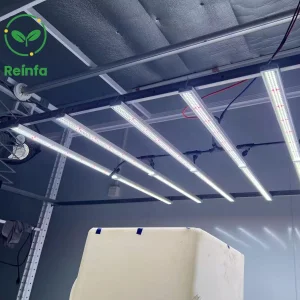
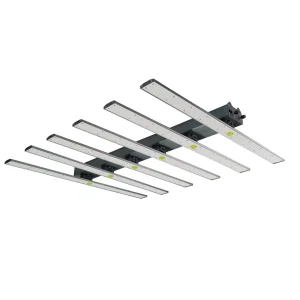
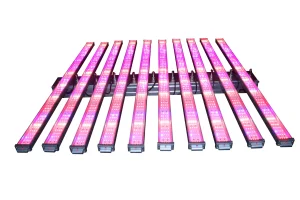
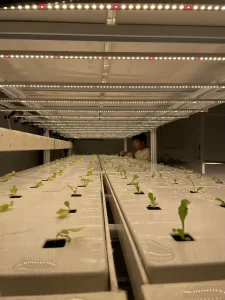
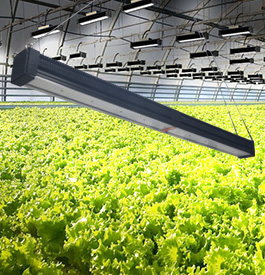
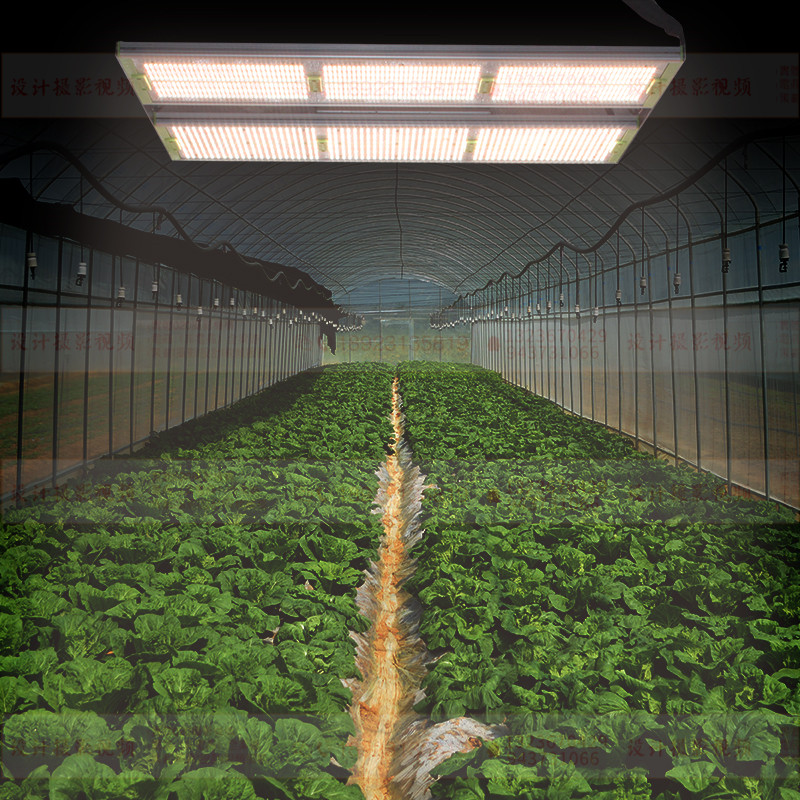
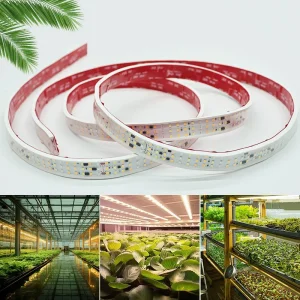
For indoor vertical farming, greenhouses, and medicinal plant cultivation, PAR (Photosynthetically Active Radiation) density and canopy penetration are critical metrics. Enova's specialized full-spectrum and COB design platforms ensure deep light delivery to stimulate high crop yields.
Founded in 2005, Jiangxi Enova Lighting Co., Ltd. has established a formidable presence in the international lighting market. By integrating research, development, assembly-level manufacturing, and global marketing under a unified quality control architecture, we provide top-tier OEM/ODM solutions to distributors, project contractors, and lighting designers worldwide.
Our manufacturing facility features a highly optimized production split: 70% automated manufacturing utilizing high-speed die bonders and wire bonders, and 30% skilled manual operation for intricate customization, quality control inspections, and bespoke wiring setups. This balance guarantees extreme technical precision alongside structural flexibility.
To back our engineering expertise, we commit 15% of our annual revenue directly to R&D. This continuous reinvestment fuels the development of 6 to 8 new products each year, earning Enova the designation of a National Hi-Tech Enterprise in 2012. Our portfolio is fortified with numerous Design Patents and Utility Model Patents, ensuring our clients receive original, defensible technology that avoids intellectual property disputes.
Compliance is the cornerstone of reliability in electrical engineering. We strictly adhere to the ISO 9001 quality management system, supervising every step of our manufacturing pipeline—from chip sorting and phosphor dispensing to final burning testing and shipment validation.
As COB architectures advance, Enova is actively integrating next-generation material science and optical configurations. The future roadmap of COB technology pivots around four critical pillars:
By mounting the LED die upside down directly onto the substrate, we eliminate bonding wires. This minimizes heat concentration, enhances electrical reliability under high drives, and increases optical extraction efficiency.
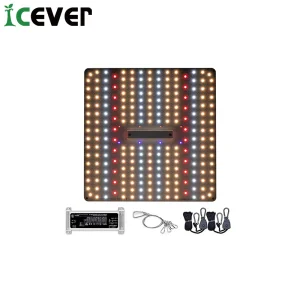
Integrating multiple phosphor formulations onto a single substrate allows our COB modules to deliver tunable white spectra (from 2200K to 6500K) or dual-spectrum zones optimized for specific vegetative and flowering phases in horticultural applications.
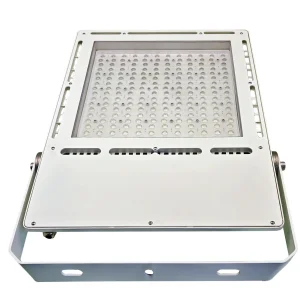
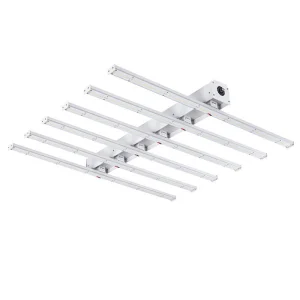
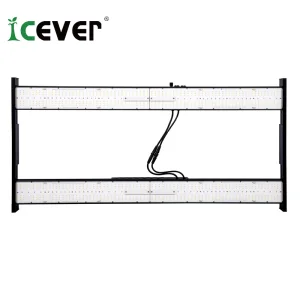
As a global exporter, we supply comprehensive, project-ready solutions that integrate our core components with specialized drivers and outdoor fixtures:
CE certification serves as a mandatory declaration of conformity within the European Economic Area (EEA). It confirms that Enova's COB lights comply with the essential requirements of safety directives, including the LVD (Low Voltage Directive) and the EMCD (Electromagnetic Compatibility Directive). This ensures the luminaires do not present electric shock hazards or electromagnetic interference with other electronics in commercial/industrial zones.
COB (Chip-on-Board) structures pack more light sources into a significantly smaller surface area. This results in a higher lumen density (lumen output per square millimeter), allowing for smaller fixture profiles with excellent beam control. Furthermore, because the dies are bonded directly to a metal-core PCB or ceramic substrate, heat is transferred more efficiently compared to SMD LED assemblies, extending the system's operational lifespan.
Our facility manufactures LED drivers (8W to 40W capacities, up to 60,000 units per month) alongside our COB components. This integrated production allows us to closely match the current and voltage profiles of our drivers with the thermal and forward voltage curves of the LEDs, minimizing current ripple, optimizing power factor (PF > 0.95), and preventing premature component failure.
Thanks to our R&D-driven process (allocating 15% of annual revenue to product development), our engineering team utilizes high-precision optical simulation software to design customized phosphor matrices. By combining specific ratios of red, blue, green, UV, and IR dies, we construct optimized spectrum configurations that match the absorption peaks of Chlorophyll A and B.
We utilize high-thermal-conductivity materials, including Aluminum-clad substrates and advanced Alumina (Al2O3) or Aluminum Nitride (AlN) ceramic substrates for high-power demands. These materials reduce the thermal barrier between the LED junctions and the external heat sink, ensuring that junction temperatures remain well below critical thresholds even during continuous operation.
 Enova Lighting